
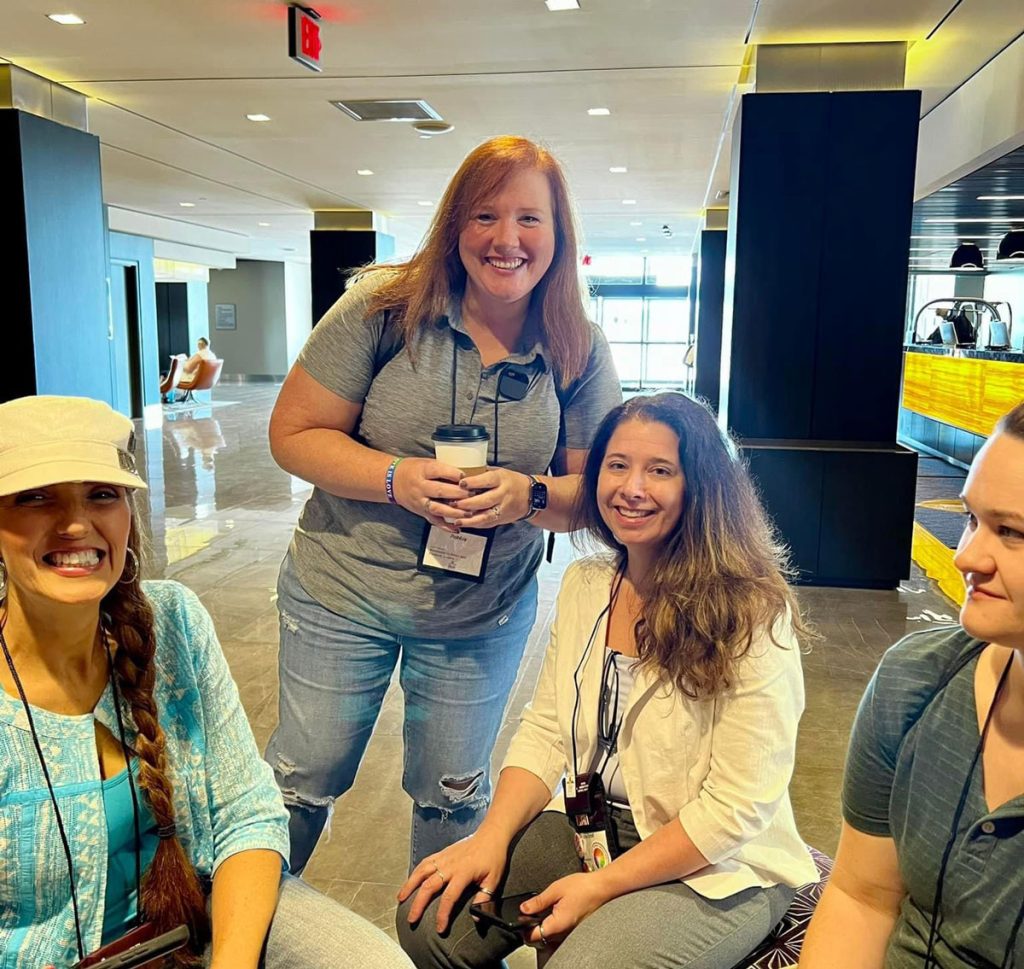
Wow, I totally had such a cool experience speaking at the 2024 GCLS Conference in the Twin Cities! It was such a joy to reconnect with familiar faces and forge new friendships. This was my first time presenting to a predominantly author-centric audience, and their perspectives and questions were a change from my usual tech crowd.
I attended the other AI-focused session and panel to ensure our content didn’t overlap and to gain insight into the audience’s concerns and interests. This proved to be incredibly valuable—I even made some last minute adjustments to my presentation based on what I had heard from the audiences!
Thank you to everyone who attended my session, your enthusiasm and curiosity made it a fun experience! For those who asked for my slide deck, you’re in luck! You can find it below. While the slides don’t include the live walkthroughs from my session, I’ve recorded a quick recreation covering the key points, especially focusing on customizing ChatGPT and using NotebookLM. I also recorded with OtterAI, so after these two resources you will find a summary, action items, and an outline.
Feel free to reach out if you have any additional questions. I’m also excited to share that I’m developing a couple of courses for OSTraining.com on these AI tools, so stay tuned for more resources to help you on your AI journey!
Slide Deck and Presentation Recreation
To provide a more comprehensive understanding, I’ve recorded a brief walkthrough of what we covered during the session. You can watch it here:
From OtterAI:
Please note, this is not edited, and there are probably things Otter didn’t translate properly, but it should give you a basic outline. Again, if you have questions, please ask.
Accelerating Your Digital Workflow: Leveraging AI for Social Media, Newsletters, and Websites
The speakers discussed leveraging AI for digital workflows, emphasizing the importance of understanding AI policies and guidelines, planning and automating workflows, and using AI tools to streamline content creation and social media management processes. They highlighted the need for a solid plan and stressed that AI should be used to augment, rather than replace, human creativity and effort. The speakers also shared their insights on how to optimize social media platforms for writers, including repurposing existing content, prioritizing specific platforms, understanding audience preferences, improving engagement and authority building, and leveraging automation tools. Additionally, they discussed the use of prompt engineering and natural language processing in automating content creation, and explored the use of personalized voice analysis to improve AI content.
Action Items
- [ ] Develop a content strategy and plan social media posts using AI
- [ ] Create content using AI tools that teach models the speaker’s voice
- [ ] Repurpose existing content into multiple formats using AI
- [ ] Set up automations between publishing platforms and AI tools
- [ ] A/B test newsletter send times using segmentation
Outline
Accelerating digital workflows with AI tools.
- Speaker 1 discusses accelerating digital workflows and leveraging AI for various tasks.
- Speaker 1 clarifies that AI policy has been released by GCLs, and provides URLs for their companies and personal website.
- Speaker discusses AI, including its history (1943) and use in digital workflows, tools, content generation, and automation.
- Speaker shares tips for using AI effectively, such as providing clear prompts and repurposing content across social media platforms.
- Speaker discusses the history of artificial intelligence (AI), from Deep Blue’s chess victory to recent advancements in neural networks and AI tools.
- Speaker addresses common fears about AI, such as job security, and highlights its potential benefits, including improved email filtering and game playing.
Digital workflow, content strategy, and automation for social media and newsletters.
- Speaker discusses digital workflow for authors, including planning content strategy and automation.
- Speaker emphasizes the importance of consistency and quality in social media and newsletter content.
AI tools for content creation, planning, and automation.
- Speaker discusses large language models like Claude, Apple Intelligence, and Google’s Notebook LM, which are fed and trained on massive amounts of data.
- Speaker highlights various AI tools like Beautiful AI, which creates slides, and Zapier, Pap Li, and MailChimp for automation, social media management, and image creation.
- Speaker discusses using AI tools for digital workflows and content creation, highlighting tools like Otter, Scribe, and Large Language Models.
- Speaker demonstrates how to use these tools for planning, content creation, and internal workflows, with examples from their own experience.
- Speaker 1 mentions using AI tools for graphic creation and video editing, finding them helpful in reducing rote work.
- Speaker 1 also highlights the importance of monitoring engagement on social media, with many social media managers now incorporating AI into their work.
Repurposing content for social media and blogs.
- Developing a content plan and using prompts to sound like the speaker.
- Speaker suggests repurposing existing content (e.g., transcripts, interviews) to save time and effort.
- Speaker advocates for using the same piece of content multiple times to increase visibility and reach.
Social media platforms for writers, with emphasis on Facebook, Twitter, Instagram, and LinkedIn.
- Speaker advises focusing on LinkedIn for business purposes, while still maintaining presence on other platforms.
- Speaker discusses the relevance of social media platforms for business marketing.
Email marketing best practices, including timing, segmentation, and analytics.
- Speaker 1 recommends analyzing your tools for scheduling and publishing, and monitoring your data to determine the best times to send emails.
- Speaker 1 suggests sending emails when your audience is most likely to be checking their inboxes, rather than adhering to a generic “best time” rule.
- Speaker suggests using a tool to manage social media analytics and improve engagement.
- Speaker emphasizes the importance of measuring open rates and engagement percentages to improve social media posts.
Automating tasks for authors and publishers using Zapier, Make, or Padley.
- Speaker 1 demonstrates automation tools for bloggers, including Zapier and RSS feeds.
- Publishers can create an RSS feed for each author on their website, enhancing Google’s perception of their publishing site.
- Speaker 1 discusses the benefits of using automation on social media, including auto-answering messages and sharing posts from authors.
- Speaker 1 cautions against using automation for liking or reposting posts without careful consideration, as it may result in unintended consequences.
Using prompts to summarize and automate tasks.
- Speaker 1 discusses using email campaign managers to send automated emails to subscribers based on their interests.
- Speaker 2 questions the effectiveness of using URL shorteners in social media posts, with conflicting information on whether it hurts or helps visibility.
- Speaker 1 demonstrates how to use shortened prompts to speed up the process of summarizing content.
- Learning shortcut prompts can help you find the information you need more quickly.
Using AI to analyze writing style and generate descriptions.
- Speaker seeks help generating social media posts and voice options for book promotion.
- Speaker discusses using chat GBT to analyze writing voice, compare to Oprah and Ellen.
Using transcripts for content creation, including sources and formatting.
- Speaker discusses using chat GPT to write content, emphasizing privacy and control.
- Speaker discusses using transcripts from videos and podcasts in a notebook for easy access.
- Speaker demonstrates how to use YouTube transcribe and custom chat GPT for transcription.
Using AI to generate content for social media posts.
- Speaker 1 discusses using AI chatbot to generate answers and prompts for research.
- Speaker 1 likes that chatbot provides sources and highlights where it found information.
- Speaker wants AI content to sound like them, using specific words and phrases.
- Speaker 1 wants Chat GPT to play the role of a romance book marketer in the US.
- Speaker 1 provides examples of romance book genres and settings they prefer.
Using automation tools for keyword research and social media posts.
- Speaker seeks to personalize social media posts for romance book authors.
- Speaker demonstrates automation tool that finds keywords for SEO optimization.
